

Where do I start?
Do you want to gain a qualification, finish your education, start your journey back to work or be able to support your children better with their learning? Accessing skills and training as an adult can be intimidating and overwhelming. Which subject to study, what type of course and at which level? To study at a local adult education college or start with an informal course offered by a charity or other local organisation? We want to help you understand what’s on offer and break down the barriers to accessing it. Many of the courses are designed so you can find your personal starting point and then move forward to build your skills and knowledge through a series of courses. For example, you might start with a taster or well-being course as a beginner and then build your skills towards a qualification, moving through the levels as you go.
Course types
Family responsibilities can be a major barrier, but gone are the days of full-time, classroom only education. Adult education providers and other organisations now offer a huge range of courses available for you to learn online from home, via distance learning roll on/roll off courses, which enable learners to join and learn at their own pace, or in-person at community venues near where you live. There are courses during the day and evening, and course lengths vary from one-day workshops or weekly short courses to full-time or part-time courses taking place over a whole academic year.
Course providers
If you’re ready to embark on a more formal learning journey, there is a wide range of local adult education colleges available across our three boroughs, offering a variety of course subjects, types and styles from multiple locations. Most of these colleges offer free Maths and English, ESOL and Digital Skills courses. They also all offer advisory services to help you decide on the correct learning opportunity or career path to suit your individual requirements, and can advise on funding, childcare and other barriers that might be standing in your way.
Below is a list of some of the local adult education colleges we’re working with and information on how to access course and careers advice. Remember, you can attend any local adult education college, not just the colleges in your borough.
Richmond
Richmond and Hillcroft Adult Community College (RHACC) offers a huge variety of courses from its two sites – Parkshot in Richmond and Hillcroft in Surbiton. Their Information, Advice and Guidance (IAG) service is open to anyone and everyone. You can book a one to one online or face to face session with a Careers Advisor for impartial guidance on careers and education choices, CVs, interview skills, job search skills, course progression and finance/funding options. Visit the RHACC website for more information, including how to book a slot.
Kingston
Kingston Adult Education offers a wide variety of courses in community locations across the borough of Kingston. Courses include Maths and English, ESOL, vocational training in book-keeping, childcare and counselling, and well-being and creative skills. They offer a Job Search Programme to support anyone looking to progress into skills and training or re-enter the workplace. This course is 2.5 hours a week and is based in Kingston, and enables you to work directly with Advice and Guidance Officers to take the next steps to returning to work. To find out more, email adult.education@kingston.gov.uk.
Hounslow
Hounslow Adult and Community Education offers a wide range of courses from seven sites across the borough. There are short informal courses as tasters or to support wellbeing; or you can study for qualifications so you can build skills to get into work or an apprenticeship opportunity. They also have courses to enhance your employability, your personal development and to support your children’s education. Contact HACE on 020 8583 6000 for information, advice and guidance.
West Thames College offers a wide variety of part-time and evening courses at their Isleworth campus for adults who want to return to work or study. If you’re not sure which course is right for you, or whether you’ve got the right entry requirements, you can ask for advice from a guidance officer.
Course levels
Understanding course levels can be daunting, but it’s important for choosing the right path so here’s a quick breakdown:
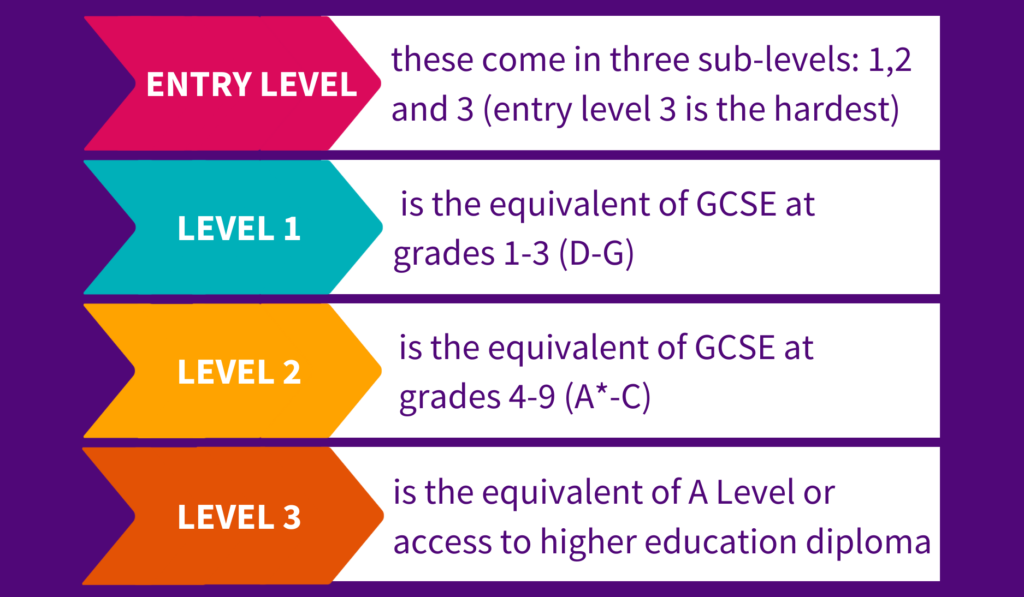
Even within these levels, there are different categories such as awards, certificates, diplomas, essential skills and functional skills. Functional Skills courses are recognised by employers and can be used to progress onto other qualifications. You can find more information on the government website, but it’s best to talk to education providers directly to work out which level is best for you. There’s a level suitable for everyone.
Once you’ve identified a potential course, some courses require an initial assessment, such as English, Maths, Digital Skills and ESOL. These allow providers to identify if the course is right for you and understand any extra support you may need. An assessment can sound intimidating and frightening, but usually they are just informal sessions with college staff to help them understand what learning and qualifications you have already done, and therefore what course or support will be of most benefit for you.
Building the confidence to get started with learning, and finding a course that is right for you, are just two of the barriers to accessing training. The Mayor’s Skills for Londoners project is about helping break down as many barriers as possible and in our next blog post we will share information about funding, childcare and digital access.